The day after the Petworth expedition Geoff, Dianne & I (along with their faithful canine companion Phoebe) took a drive down the A24 to the village of Dial Post and parked there for a visit to the Knepp Castle Estate. If Petworth was the apogee of 18th Century landscaping on the grand scale in England then Knepp must be the 21st Century equivalent for re-wilding. How do you balance the need for home food production with the restoration of nature in the farmed landscape? Knepp was one of the first big estates in England to tread this tricky path and the results have been very encouraging indeed.
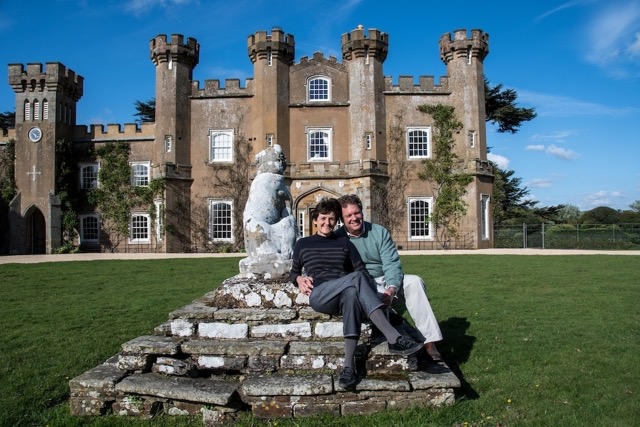
The 3,500 acre estate just south of Horsham has been in the Burrell family for 220 years. Charlie Burrell and his wife Isabella Tree took on the running of it in 1983. They farmed it conventionally for 17 years as a combined dairy and arable operation. The land hereabouts is predominantly heavy Wealden clay. A great thick mass of it, intractable and heavy, dry and cracked in summer and a dense porridge in winter, and that required tons of artificial fertiliser to increase yields. The soil became even poorer over the years to the point where they were putting more resources in all round than they were taking out. That, combined with ever decreasing margins from milk production, forced them to consider radical alternatives if they wanted to keep farming. They resolved to turn conventional wisdom on its head by taking their hands off the steering wheel and letting nature take over; to begin a challenging process of regenerative husbandry on the 2,400 acres/1,000 hectares bulk of the estate.
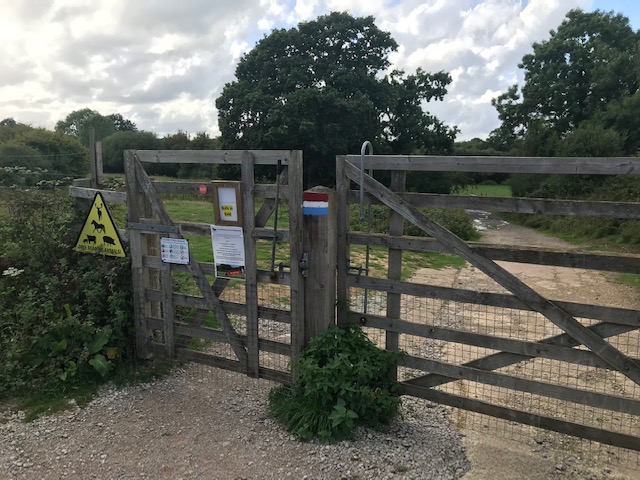
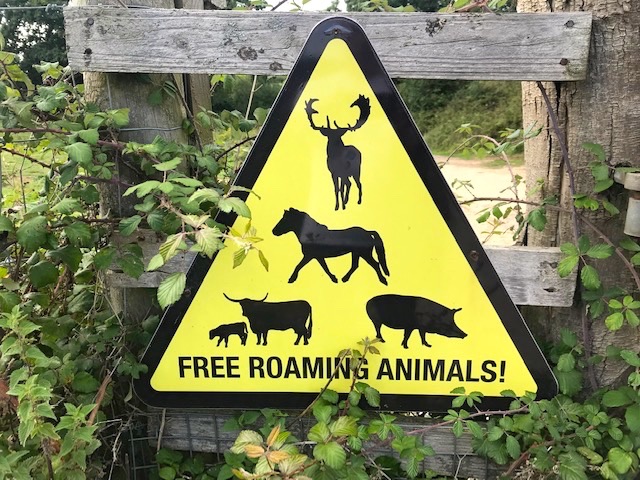
The 21st century started with the painful business of selling off the dairy herd, letting the arable out to contract, getting rid of the heavy machinery and letting loyal employees go with it all. They then removed internal stock fencing and built tall encompassing perimeter fencing to retain their new stock, creatures who would best mimic beasts of the ancient past – aurochs, bison, wild boar. They chose traditional English Longhorn cattle, deer (red, roe & fallow), Exmoor ponies and Tamworth pigs. With their differing grazing patterns these beasts would be the drivers of change, the self regulating managers by which rebalancing could occur across the whole range of interconnected habitats.
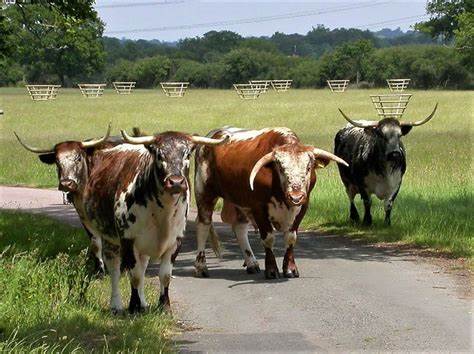
Sadly we saw none of those handsome cattle on our three mile sojourn along one section of the estate’s 16 miles of public footpaths and bridleways. We did though glimpse the fleeting forms of deer through dense patches of undergrowth and rejoiced at the sight of sows and boars, wallowing in newly created ponds or alongside their maturing piglets turning up the turf of the re-wilded fields. Grubbing up by the pigs, trampling by the cattle, browsing by the deer and cropping by the ponies all play their part in letting nature back into the picture.
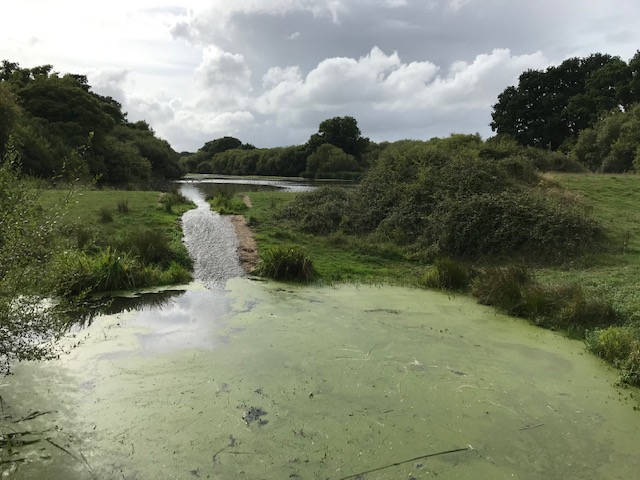
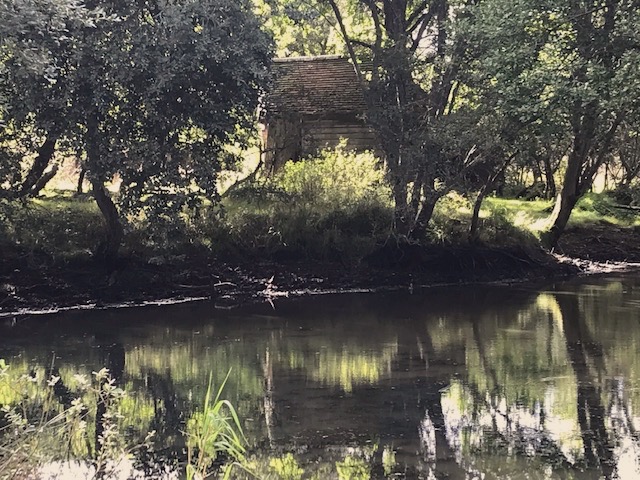
Some of the perimeter land was still fenced and the grass not let go as elsewhere. Another field was given over to solar panels as they seek to be self sufficient in power. In Tudor and Stuart times the River Adur’s headwaters had been harnessed as ‘furnace ponds’, reservoirs that powered iron making, when the forests of the Sussex weald provided the industry’s raw fuel. I noticed stands of hazel in the woods we passed, formerly coppiced, and wondered if they’ll be harvesting them again in future for charcoal making, producing decorative hurdles etc.
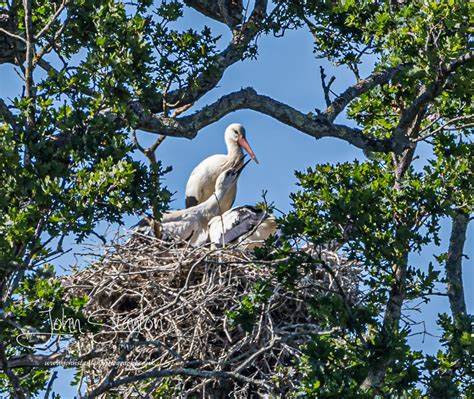
A lady we met dog walking told us that carp are seen in the headwaters of the river while white storks, previously unknown to breed here, are now well established, either in the trees or utilising purpose built platforms dotted about the place. Big increase in a number of species, previously in decline or not seen here for decades, include those of nightingales, turtle doves, peregrine falcons and purple emperor butterflies.
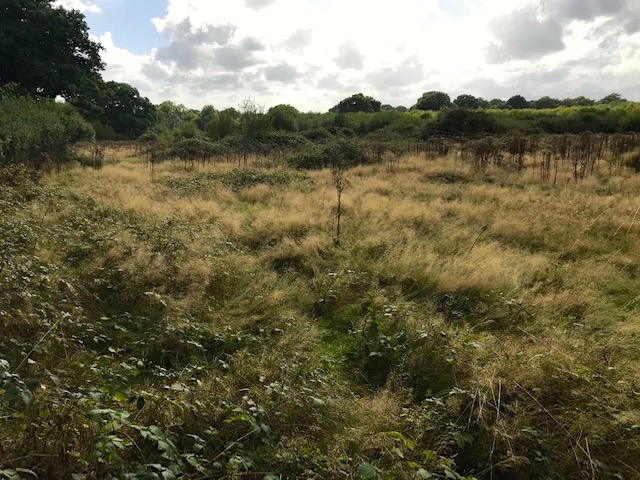
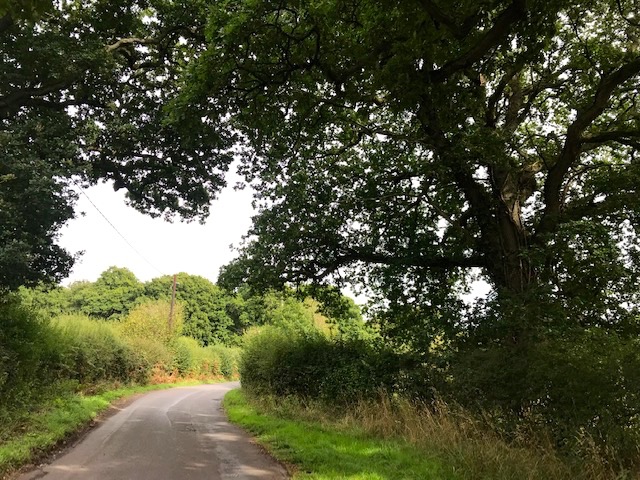
Tree houses are stationed in the magnificent old oaks by the bridle paths and they gave us views over flat fields now sprouting trees, shrubs and flowers. Noticeable were the masses of fleabane in some pastures, alongside scabious, plantain etc. The uncut hedges, with their fund of berries, grow high and wide here, linear woods providing food and shelter, that also act as wildlife corridors.
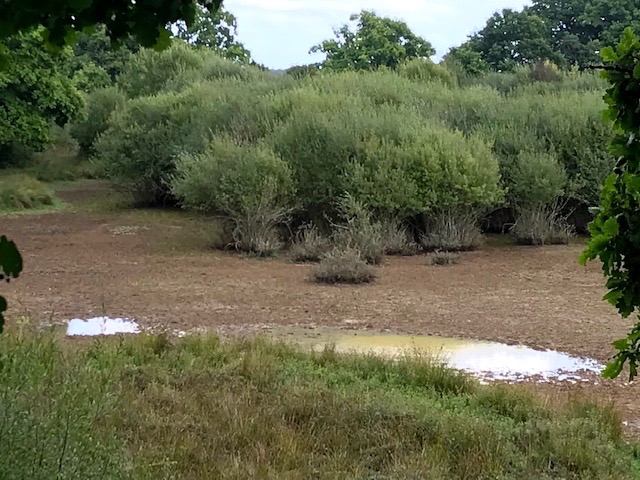
Willow Carr was evident where the blocking of ditches and drains have resulted in the creation of 78 acres of wetlands. That has brought back even more species of wildlife as well as providing watering places, shelter and food for stock.

The circularity of it all is key. I’ve never seen happier or more contented pigs as these Tamworths, free ranging outdoors in their natural environment. We saw them wallowing & foraging in the waterways and feeding on acorns (pannage) which gives depth and flavour to the meat, sold locally and in the estate shop or by mail order. Likewise for the different beef and venison cuts, which are matured on the bone for tenderness and flavour.
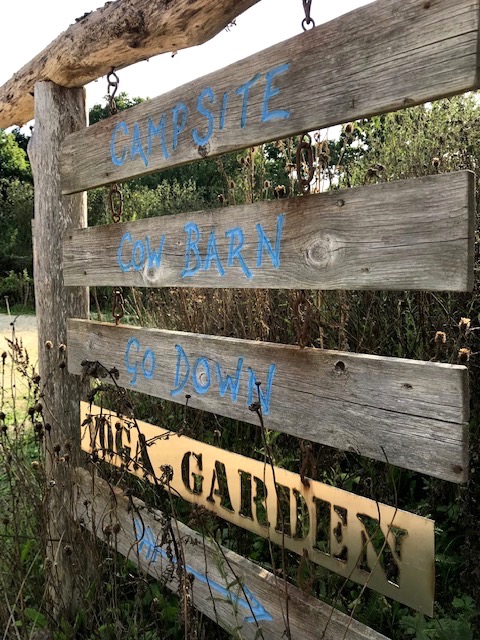
The emerging success of this revolutionary process has allowed the estate to develop a range of eco-tourism offers; from camping and shepherd huts, yurts and bothies to wildlife safaris by all terrain vehicles as well as yoga retreats and wildlife study courses.
The Burrell’s benefit greatly from grant aid by Natural England and government higher stewardship funding and their work has been hugely influential in shaping both public and governmental opinion on nature restoration, carbon capture and soil health, flood prevention, food quality etc. The National Trust and other estates have implemented or plan to launch their own schemes for regenerative farming and nature renewal inspired by Knepp. Current projects involve developing and supporting a cluster group of neighbouring farms to spread interconnectivity for wildlife through a contiguous cross county corridor.
The Knepp castle estate model is not a panacea to fit all UK farmed landscapes but it is a positive exposition of what is possible and gives all who care about nature, farming and the rural environment cause to believe that truly sustainable and balanced ecosystems are achievable. Now the challenge is to extend and broaden the scale of change so that the population at large can benefit and the restoration and regeneration of nature in our country be secured for future generations.
I wrote last year about the ongoing regenerative work by the Bennett family at Middleton North Farm Northumberland inspired by the Burrell’s work..
You can find out more about the Knepp project on the website: https://www.kneppestate.co.uk
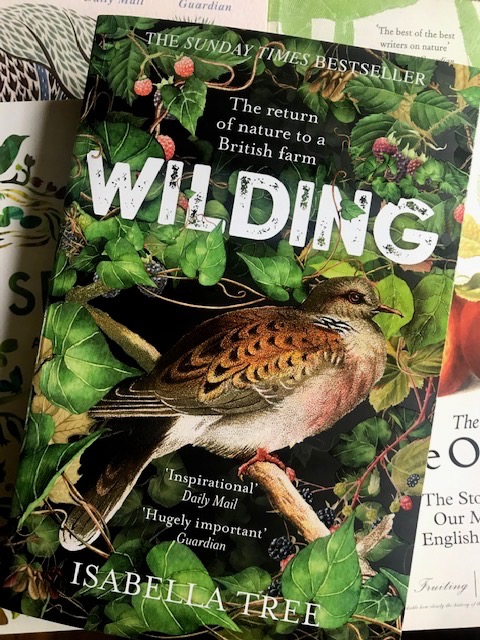
Isabella Tree’s bestselling book Wilding (2018) eloquently chronicles the Knepp story and is available at your local library or from all good bookshops. A practical follow up book, The Wilding Handbook, is due to be published soon. More about Isabella and her books here: https://www.isabellatree.com/
It was a serendipitous pleasure to visit Petworth and Knepp, back to back. Both estates reveal a lot through form and use about the epochs that created them and the complex interactivity between man and nature that make such landscapes dynamic reflections of society at a particular point in time. I’m looking forward to returning to Sussex in another season, to walk more parts of both estates, and see what else can be discovered.

 STEPHEN TOMLIN