Spent a few happy days away in the Scottish Borders, staying with the two oldest grandchildren while their mum, my daughter, was away in Edinburgh housesitting for a friend. Good time had catching up with Thea (15) and Joe (18). We shared their pleasure and relief that they’ve done well in school exams and are both ready for the next steps in their educational journey.
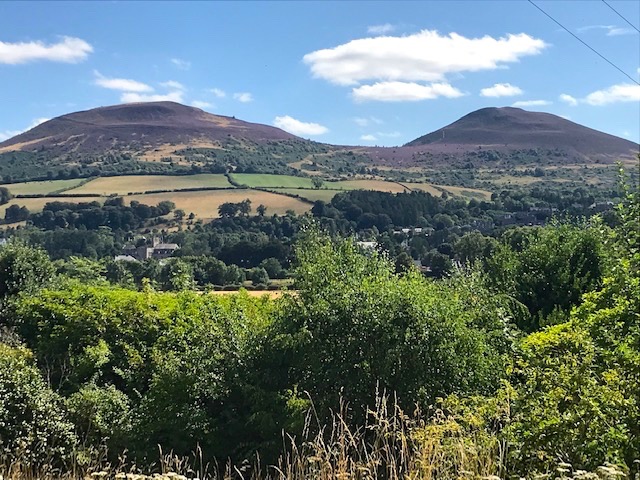
We did a couple of countryside walks. The family home in the village of Gattonside gives outstanding views over Melrose, centred round its romantic ruined abbey, and the heather and bracken covered steep slopes of the Eildon hills beyond. Leafy Gattonside, lying on the sunnier south flank of the valley of the Tweed, was the site of the medieval monks orchards. Today a footpath links it via a fine Victorian suspension bridge over the river to Melrose. I like the attractive small town’s range of independent shops and hostelries, with happy memories of attending the Borders Book Festival here in summers past. Reminded too that the former Saxon Kingdom of Northumbria once stretched from modern day County Durham to these eastern Scottish Borders, with its capital at Bamburgh on the Northumberland coast, so in an historic sense at least we were still on home turf.
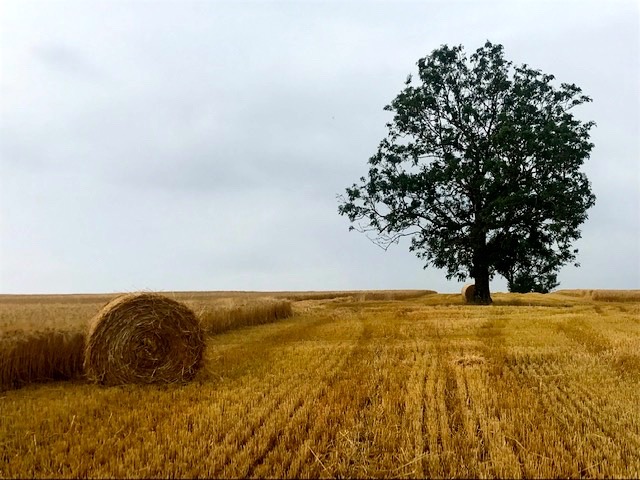
Our first day walk was led by the kids, who know the terrain well. An initial steep climb up the hillside behind the house, with stops to enjoy good viewpoints over the wider fertile valley and its settlements. A field occupied by bull and cows with calves at foot prompted a diversion around a field of barley where the headlands had been mowed and the combine harvester was at rest, minus driver.
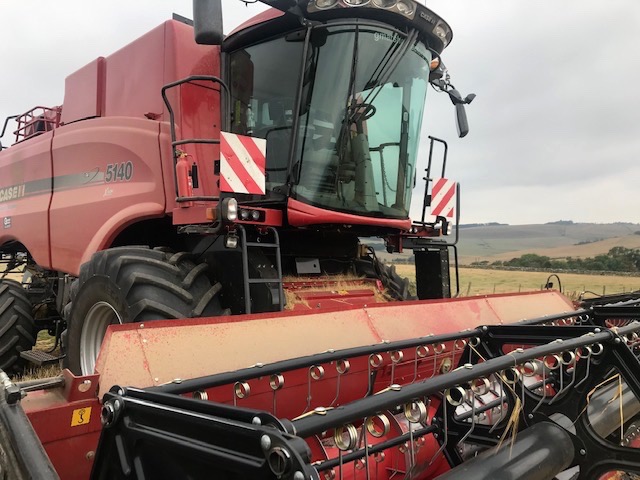
These great machines never fail to impress, especially when seen up close as now. What a revolution they have wrought in agriculture. Reaping, threshing and winnowing combined in one machine. This one was an American make, the CaseIH5140. Smaller than many and no doubt better suited to this sort of hilly terrain and relatively small acreage. Jerome Case invented and manufactured his first horse drawn machine in the 1840’s on the plains of Wisconsin. The business later amalgamated with that of fellow inventor Cyrus McCormick and eventually in the 20th century the by then multinational business became known as Case International Harvester, or CaseIH.
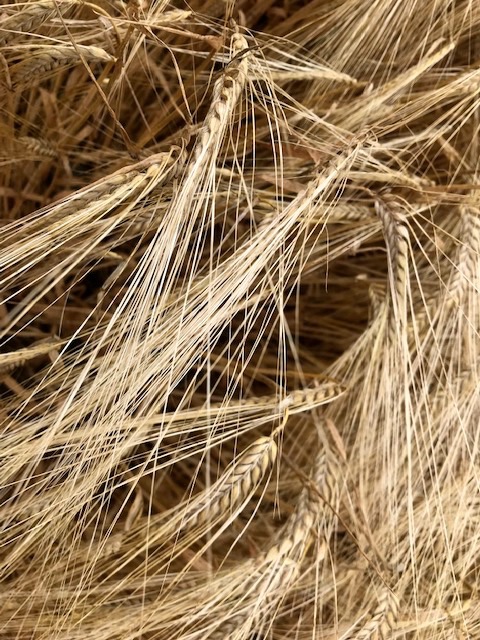
The barley was short stalked. Almost certainly this is premium grade grain, grown to supply Scotland’s famous whisky industry with its key ingredient. Apparently the qualities of an ideal crop are consistent grain size in each ear of corn, low nitrogen and high starch content to produce good enzymes required for the germination and drying process of malting, the basis of the distilling process.
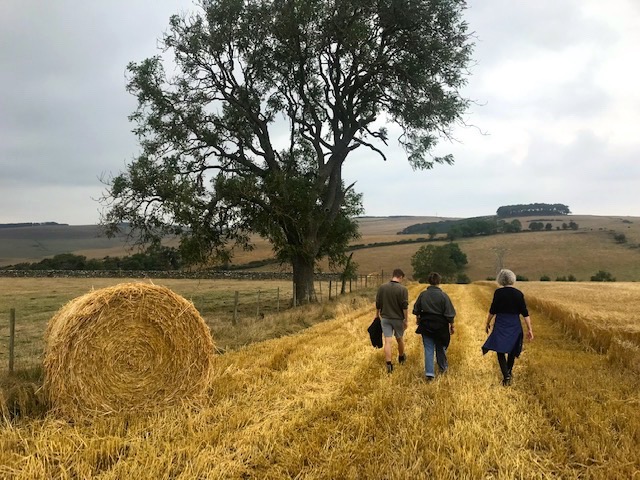
We picked up the Southern Upland Way, making a gentle descent under the cooling shade of beech trees, emerging into quiet narrow lanes that eventually brought us back home. This is Scotland’s first and only coast to coast long distance path. 212m/341K in length the trail runs across the border country, mainly over sandstone hills, south west to north east, from the Atlantic to the North Sea.
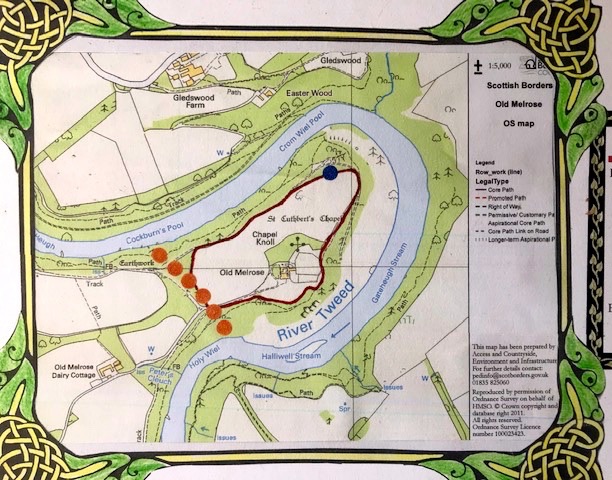
Our second family walk allowed us to discover Old Melrose, a few miles downstream from the current site, situated on a promontory formed by a hairpin bend in the Tweed. This was the land gifted by King Oswald of Northumbria in the 7th Century to missionary monks from Iona, led by St Aiden. That early set of monastery buildings would have been separated from the mainland by an earth bank ditch or vallum. This physically secured the site and acted as a reminder that the monastery was a sacred holy place, separated from the secular world. It would have been treeless then, hence the name ‘Bare Headland’ or ‘Mail Ross’. Aiden inspired Cuthbert to become a monk and eventually he became Prior here. Cuthbert heavenly visions caused him to leave for Lindisfarne where he secure Aiden’s foundation on Holy Island, and where he was initially buried as a revered saint. The modern St Cuthbert’s Way, officially designated as a long distance trail in 1996, retraces the great man’s 62m/100K sojourn.
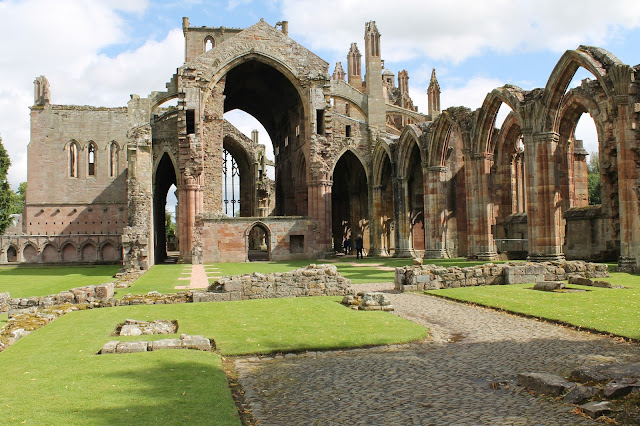
Eventually, through war and political shifts the old monastery at Mail Ross was destroyed, and though rebuilt was, by 1073, once again in ruins with only a pilgrimage chapel remaining. In 1130 King David of Scotland granted the land to the Cistercian monks of Rievaulx. They retained the name but moved the settlement two miles west to what is now the location of Melrose Abbey.
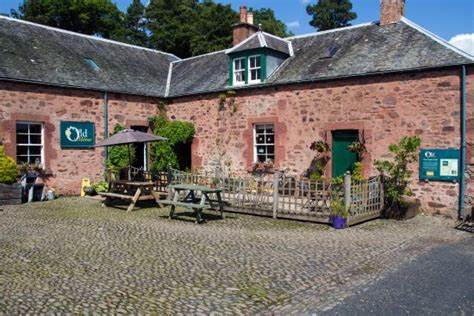
The peninsula today is part of an estate owned by the Younger family who made their fortune in the C19th as Scotland’s leading brewers. The family purchased and rebuilt ‘Ravenwood’, an estate house that lies hidden in the woods that now cloak the previously ‘bare headland’. Where those woods give way to pasture and arable the estate steading’s old court yard has been converted to offices, an antique shop, café and second hand bookshop. We had a excellent lunch outdoors there after our traverse of the estate’s scenic trails.
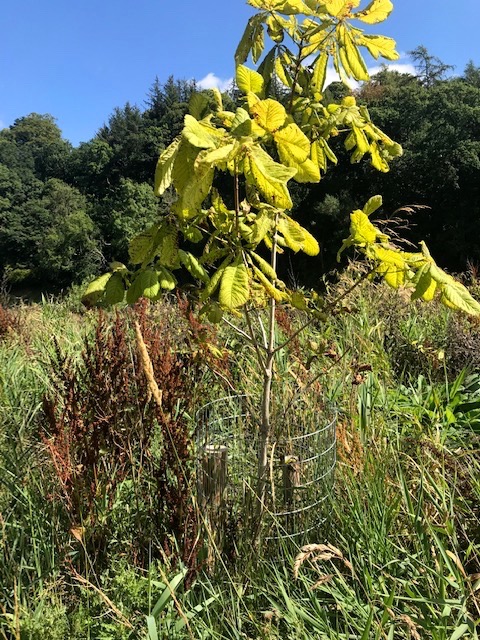
Landowner William Younger has initiated a phased programme of works to clear coniferous plantations and replant with deciduous trees. We saw chestnut (above), rowan, oak, hazel etc. secured by tree guards, surrounded by deer fencing. Those clearances and rides also happen to encourage butterflies to breed and open fine views of the Tweed, one of the country’s best salmon and trout fisheries. There’s a mile and a half’s beat here on the right bank, with eight named pools, good for both high and low water conditions. Anglers who can afford the rates clearly need to be confident casters of line and competent waders in its variable waters.
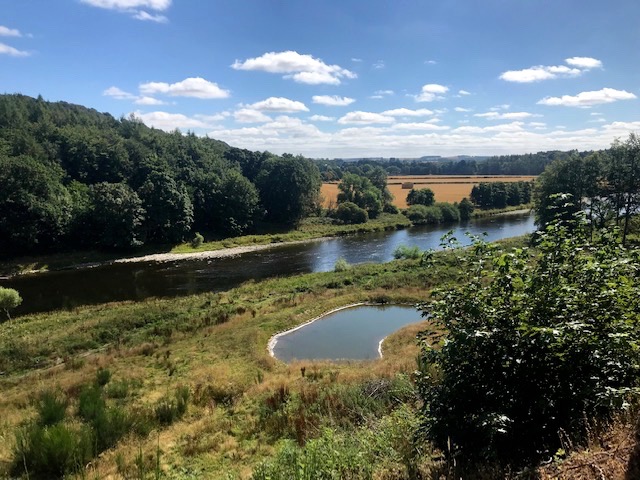
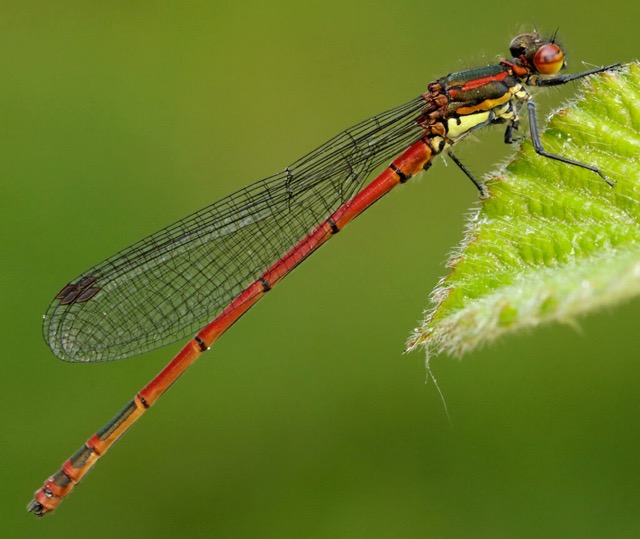
We passed a newly created wildlife pond on the wider flood plain. Lined and weighed with stones around the circumference with no planting to soften the outline it presents as bare and uninteresting. No doubt in a few years it’ll be serving its intended purpose, creating a rich habitat for amphibians, insects and water fowl. In that regard I was delighted to catch large red damselflies skimming its shallows – testing the waters as it were. We’ll come back another day to see how it’s all coming along.

 STEPHEN TOMLIN